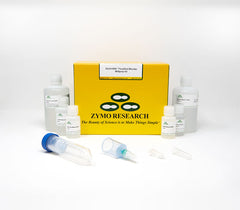
Quick-DNA Fecal/Soil Microbe Kits
The Quick-DNA Fecal/Soil Microbe Kits are fecal and soil DNA extraction kits designed for the simple and rapid isolation of inhibitor-free, PCR-quality host cell and microbial DNA from a variety of sample sources including humans, birds, rats, mice, cattle, etc. The procedure of these fecal and soil DNA extraction kits is easy and can be completed in minutes: fecal samples are rapidly and efficiently lysed by bead beating with our state of the art, ultra-high density BashingBeads. Zymo-Spin and Zymo MagBinding Bead technologies are then used to isolate the DNA in select fecal and soil DNA extraction kits in this collection. These fecal and soil DNA extraction kits feature our Inhibitor Removal technology, which removes humic acids/polyphenols that can inhibit PCR. Eluted DNA is ideal for downstream molecular-based applications including PCR, arrays, genotyping, methylation detection, etc.
Comparison Table
| Catalog # | Product | Yield | Elution Volume | Format |
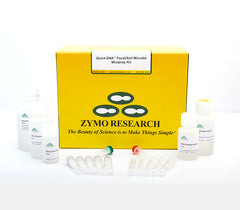
| D6012 | Quick-DNA Fecal/Soil Microbe Microprep Kit | 5 µg | ≥ 10 µl | Spin-Column |
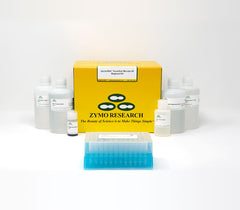
| D6010 | Quick-DNA Fecal/Soil Microbe Miniprep Kit | 25 µg | ≥ 50 µl | Spin-Column |
| D6110 | Quick-DNA Fecal/Soil Microbe Midiprep Kit | 125 µg | ≥ 150 µl | Spin-Column |
| D6011 | Quick-DNA Fecal/Soil Microbe 96 Kit | 5 µg | ≥ 50 µl | 96-Well Plate |
| D6010-FM, D6011-FM, D6012-FM | Quick-DNA Fecal/Soil Microbe 96 Magbead Kit | 25 µg | ≥ 37.5 µl | Magnetic Beads |