
Announcing, Zymo Research’s 2025 RNome Disruptive Research Grant Recipients
We are thrilled to announce the five outstanding recipients of the RNome Disruptive Grant, each of whom is pushing the boundaries of RNA research in bold and innovative directions. These exceptional scientists exemplify the spirit of disruptive science - challenging assumptions, unlocking new frontiers, and shaping the future of RNA-based discovery and therapeutics.
“The RNome Project was created to accelerate bold ideas in RNA biology. These five winners embody that vision, pushing science beyond boundaries and opening new possibilities for medicine and discovery.”
Dr. Stanislav Forman, PhD, Director of Sample Prep at Zymo Research
Meet the 2025 RNome Disruptive Research Grantees
-

-
Dr. Shihoko KojimaOccupation: Associate ProfessorAffiliation: Department of Biological Sciences, Fralin Life Sciences Institute, Virginia TechResearch Focus: Circadian biology - Interested in understanding how RNA-mediated mechanisms drive rhythmic gene expression, physiology, and behavior in mammals.Proposed Project: Dr. Kojima’s lab investigates the fascinating complexity of circadian biology, uncovering how long non-coding RNA-mediated mechanisms orchestrate rhythmic gene expression, physiology, and behavior in mammals. By leveraging tools such as RNA-seq, CRISPR-based technologies, and luciferase assays, her research illuminates how molecular clocks control life’s daily rhythms.Applied Techniques: RNA extraction, RT-qPCR, RNA-seq, single-cell RNA-seq, CRISPR, DNA cloning, site directed mutagenesis.
-

-
Dr. David Valle-GarciaOccupation: Principal InvestigatorAffiliation: Epigenomics of Aging Laboratory Center for Aging Research Cinvestav South CampusResearch Focus: Dr. Valle-Garcia employs bioinformatic and molecular biology techniques to investigate the role of histone and RNA epigenetic modifications in age-related diseases, including cancer and metabolic disorders. Passionate about precision medicine, Dr. Valle-Garcia develops RNA-based diagnostics for early detection of these diseases.Proposed Project: Dr. Valle-Garcia’s lab investigates how histone and RNA epigenetic modifications contribute to age-related diseases, including cancer and metabolic disorders. Integrating bioinformatics and molecular biology approaches such as RNA-seq, ATAC-seq, and nanopore sequencing, he is advancing precision RNA diagnostics for early disease detection and intervention.Applied Techniques: RNA-seq, ATAC-seq, ChIP-seq, nanopore sequencing, qPCR, transcriptomic analyses, epigenomic analyses.
-

-
Dr. Wenwen FangOccupation: Assistant ProfessorAffiliation: RNA Therapeutics Institute, UMass Chan Medical SchoolResearch Focus: Dr. Fang’s lab investigates the mechanisms and functions of non-coding RNAs, with a primary focus on double-stranded RNAs (dsRNAs) in innate immune sensing and microRNA (miRNA) biogenesis.Proposed Project: Dr. Fang’s research delves into the mechanisms and functions of non-coding RNAs, with a special focus on double-stranded RNAs (dsRNAs) in innate immune sensing and microRNA (miRNA) biogenesis. Using a multidisciplinary toolkit that spans functional genomics, structural biology, and high-throughput sequencing, her work is poised to redefine how we understand RNA’s role in immunity and disease.Applied Techniques: A combination of biochemistry, molecular biology, high-throughput sequencing, functional genomics, and structural biology to address key questions in non-coding RNA biology.
-
-
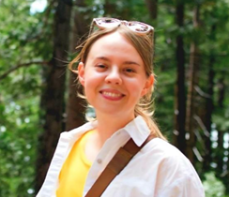
Dr. Ana NovacicOccupation: Postdoctoral ResearcherAffiliation: Stanford UniversityResearch Focus: Dr. Novacic is developing genetically encoded tools to enable high-throughput mapping of RNA localization and interactomes in live cells.Proposed Project: Dr. Novacic is pioneering genetically encoded tools to map RNA localization and interactomes within live cells at scale. Her innovative strategies, combining genetic engineering, proximity labeling, and RNA sequencing, promise to transform how researchers study RNA dynamics and functions in real-time cellular environments.Applied Techniques: Genetic engineering, proximity labeling, RNA sequencing
-

-
Ajin (Jin) ParkOccupation: Ph.D candidate, Dr. Cun-Kan Chen’s LabAffiliation: Washington University in St. Louis, DBBS (Division of Biology and Biomedical Sciences) Cell Biology and PhysiologyResearch Focus: Jin's research explores the regulatory mechanisms that govern circular RNA (circRNA) translation and their implications for RNA-based therapeutics. In particular, I am interested in how circRNA translation is differentially regulated under stress conditions compared to mRNA translation, with the main goal of advancing stress‑responsive RNA medicine.Proposed Project: Jin Park’s research centers on the regulation of circular RNA (circRNA) translation, particularly under stress conditions, with the ultimate goal of advancing stress-responsive RNA medicines. By dissecting the unique translational mechanisms of circRNAs compared to mRNAs, Park is paving the way for next-generation RNA-based therapeutics.Applied Techniques: in vitro circRNA synthesis, RNA purification, RNA extraction, gel RNA recovery, small-RNA PAGE recovery, oligo (small RNA) clean up
Looking Ahead
These five remarkable winners embody the disruptive innovation the RNome Grant was designed to champion. Their creativity and commitment are pushing the RNA field forward—toward breakthroughs in circadian biology, RNA therapeutics, stress-responsive medicine, live-cell interactome mapping, and precision epigenomics.
We are honored to support their journeys and cannot wait to see the transformative discoveries that emerge from their research. Congratulations once again to the 2025 RNome Disruptive Grant Winners!