
From Funding to Publication
Featuring the Work of a Master the Microbiome Grant Finalist
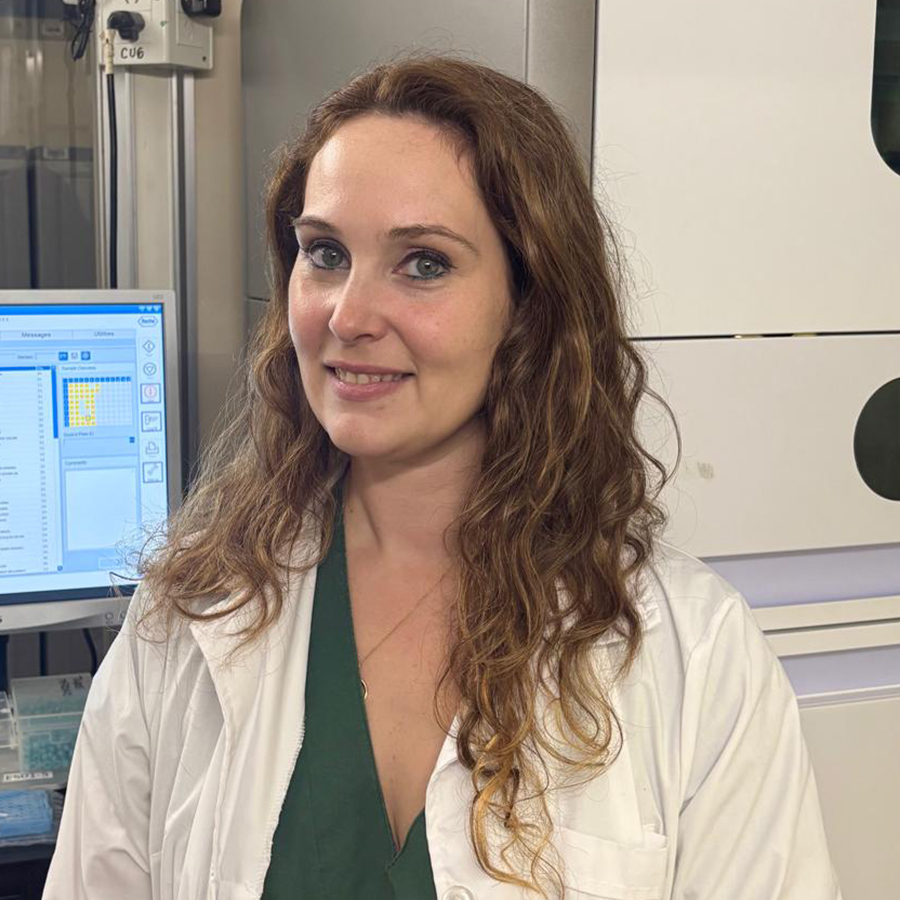
In 2025, Dr. Maria Florencia Fernandez was a finalist for Zymo Research’s Master the Microbiome Grant, winning $2500 for products and services. This year, Dr. Fernandez and her team from the National Pediatric Hospital JP Garrahan (Buenos Aires, Argentina) published their work in Frontiers in Microbiomes.
-
Dr. Maria Florencia Fernandez2025 Master the Microbiome Grant Finalist
-
Primary Affiliation: National Pediatric Hospital JP Garrahan, Buenos Aires, ArgentinaFeatured Publication: Fecal microbiota transplantation promotes gut microbiome recovery in pediatric hematopoietic stem cell transplant recipientsPublished In: Frontiers in Microbiomes 5:1849762
How Building New Blood Blends into the Gut Microbiome
Dr. Fernandez’s grant-winning project focused on pediatric patients who have blood cell formation disorders. Blood cells, like red blood cells, white blood cells, and platelets, develop in the bone marrow from hematopoietic stem cells. Despite sharing an origin story, each blood cell has distinct roles in the body, becoming couriers of oxygen, defenders from invaders, or clot-inducing healers, respectively. Disruption of blood cell formation, as occurs in cancers like leukemia, hinders these important roles, with life-threatening consequences.
One option to counter faltering blood cell formation is hematopoietic stem cell transplantation, sometimes called a bone marrow transplant. While transplants can be lifesaving, there are also risks. For example, graft-versus-host disease is when donated immune cells attack the transplant recipient, leading to inflammation and other adverse effects. Not only that, but transplant patients may be receiving other therapies, like immunosuppressants, chemotherapy, or antibiotics, which further contribute to whole-body disruption, including disruption of the gut microbiome.
Could there be a better way to support the weakened gut microbiome of pediatric patients that received a bone marrow transplant?
A Lifeline for the Good Guys in the Gut
Dr. Fernandez and her colleagues aim to help the gut microbiome rebound in pediatric transplant patients by using fecal microbiota transplantation, otherwise known as a stool transplant. Stool transplants involve screening, processing, and donation of a stool sample to deliver beneficial microbes to the patient, without harmful pathogens. For her funded project, Dr. Fernandez assessed the gut microbiome of pediatric patients that received both bone marrow and stool transplants so that she could investigate the gut’s recovery process.
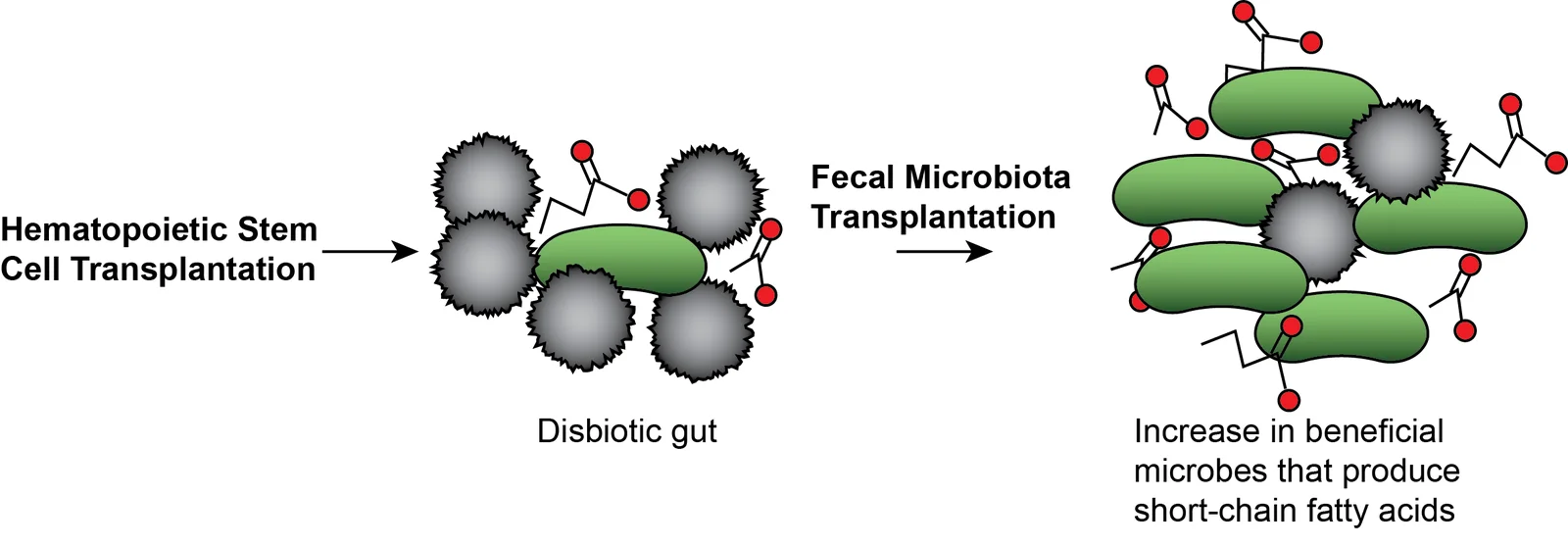
The hypothesis of Dr. Fernandez’s grant-winning project.
The team at the National Pediatric Hospital JP Garrahan collected stool samples from 17 patients before and after stool transplants to see how the gut microbiome changed over time. Specifically, Dr. Fernandez prepared libraries for 16S rRNA gene sequencing, which uses regions of ribosomal RNA for species identification to see how populations shift. Support from the Master the Microbiome Grant allowed Dr. Fernandez to sequence her libraries through Zymo Research’s sequencing services. The libraries were shipped safely from Argentina to the United States using the Green DNA/RNA Shield Dry Transport Kit for ambient temperature shipping and were sequenced alongside a microbial community standard at Zymo Research.
In her featured publication, Dr. Fernandez found that the species composition of the gut microbiome changed significantly within two weeks of a stool transplant. Initially, after the bone marrow transplant, patients had dysbiosis-associated, or unbalanced, microbial profiles. However, after the subsequent stool transplant, these profiles began to recover. Species that produce energy-providing metabolites, like short-chain fatty acids, were revitalized. The shift in power away from opportunistic bacteria to beneficial ones may help patients feel better and suggests a potential avenue for future strategies to protect transplant recipients from severe graft-vs-host disease. Dr. Fernandez’s work is one of the first of its kind, providing insight into the reconstruction of the gut microbiome after bone marrow and stool transplants in pediatric patients.
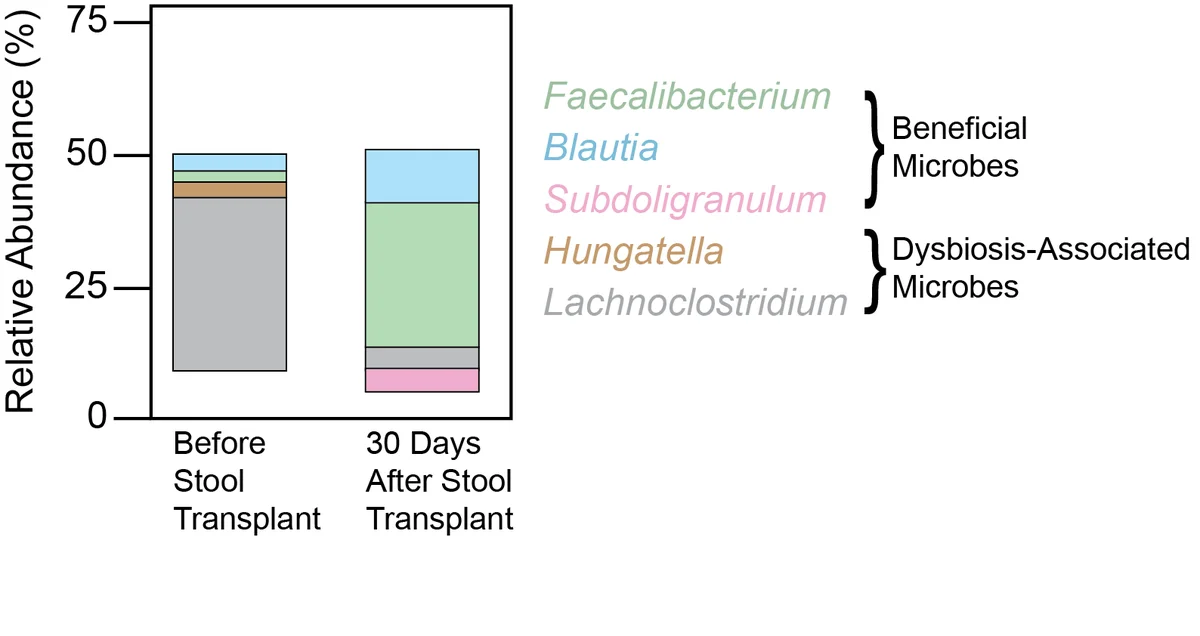
The relative abundances of a subset of species found in the gut microbiome of bone marrow transplant patients both before and after a stool transplant. Adapted from Fernandez et al. (2026), Figure 2.
Digesting the Implications for the Gut Microbiome and Beyond
To celebrate the publication, Zymo Research met with Dr. Fernandez and her Laboratory Head, Dr. Andrea Mangano, to hear the story of their project and learn about what they’re planning to do next. The two shared their excitement about the potential benefits of using stool transplants as a preventative or therapeutic strategy after a bone marrow transplant. By restoring the gut microbiome’s colonization resistance, perhaps stool transplants could support overall recovery and reduce adverse effects, like infections or even graft-vs-host disease.
Now, the team is curious about exploring how stool transplants could play a role in combating other infections. Turning from bone marrow transplants to food poisoning, Dr. Fernandez has recently been investigating how stool transplants could support recovery from persistent Campylobacter jejuni infection when antibiotics fail in an immunocompromised pediatric patient. Early results make the team optimistic about the potential for stool transplants to serve as an alternative therapeutic strategy, especially in cases where antibiotics aren’t working.
Dr. Fernandez and Dr. Mangano are eager to continue to discover the full potential of stool transplants so that they can best support their pediatric patients. In pursuit of this goal, the team is pushing for more development of quantitative PCR assays to diagnose imbalances of the gut microbiome, which would allow them to more quickly identify which patients might benefit most from stool transplants. Despite their lofty goals and demanding research, the team at the National Pediatric Hospital JP Garrahan never forgets the patients it serves. As Dr. Mangano emphasized, “Everything we do is focused on the patient.”
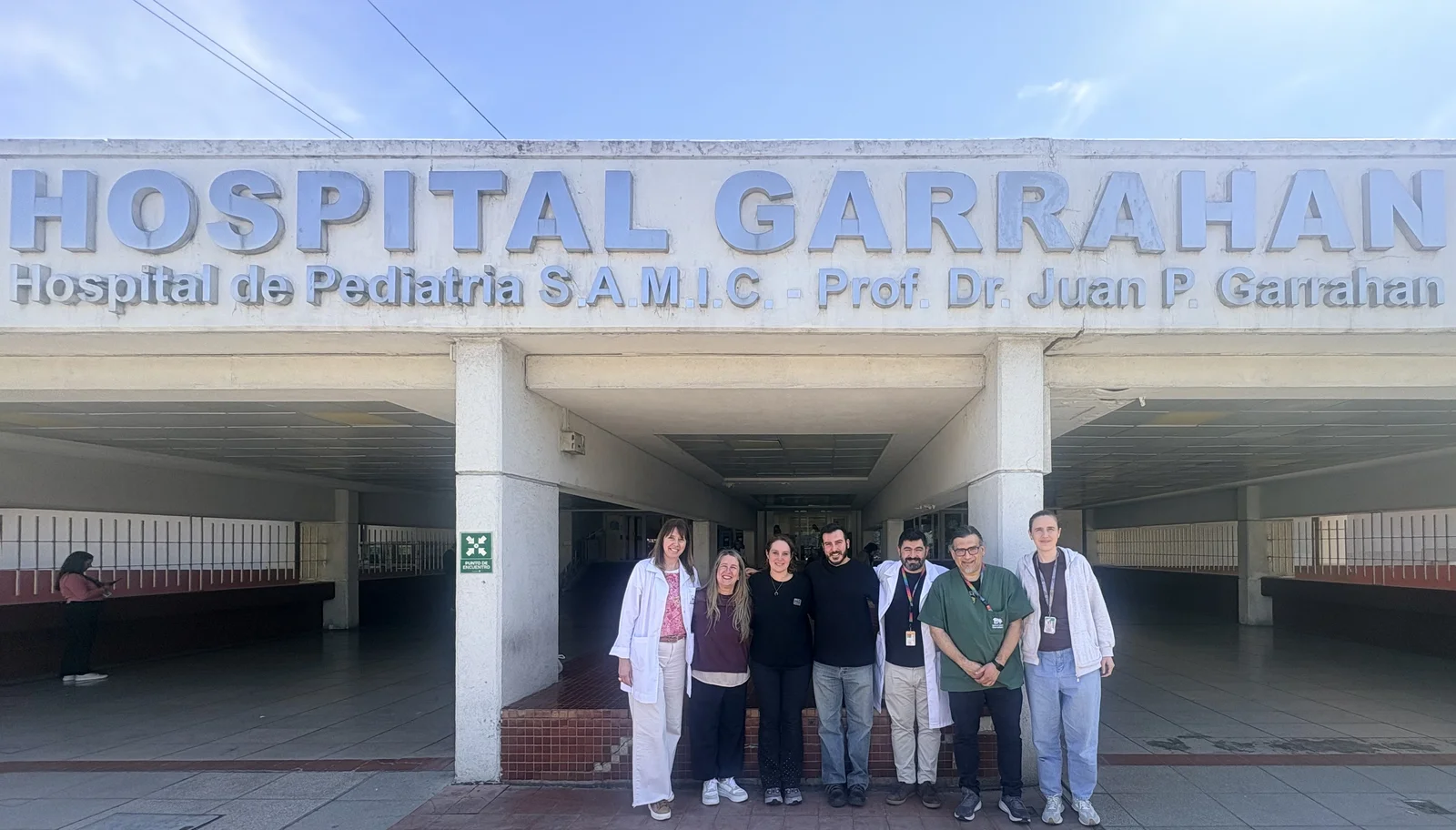
Dr. Maria Florencia Fernandez, finalist of the Master the Microbiome Grant, with her team outside of the National Pediatric Hospital JP Garrahan in Buenos Aires, Argentina.
Zymo Research is proud to feature the research of a Master the Microbiome Grant Finalist and remains committed to Supporting Innovation in Microbiome Science Across Challenging Environments.